
Off Script FAQ (So Far)
Some hows, whys, wheres, and whats

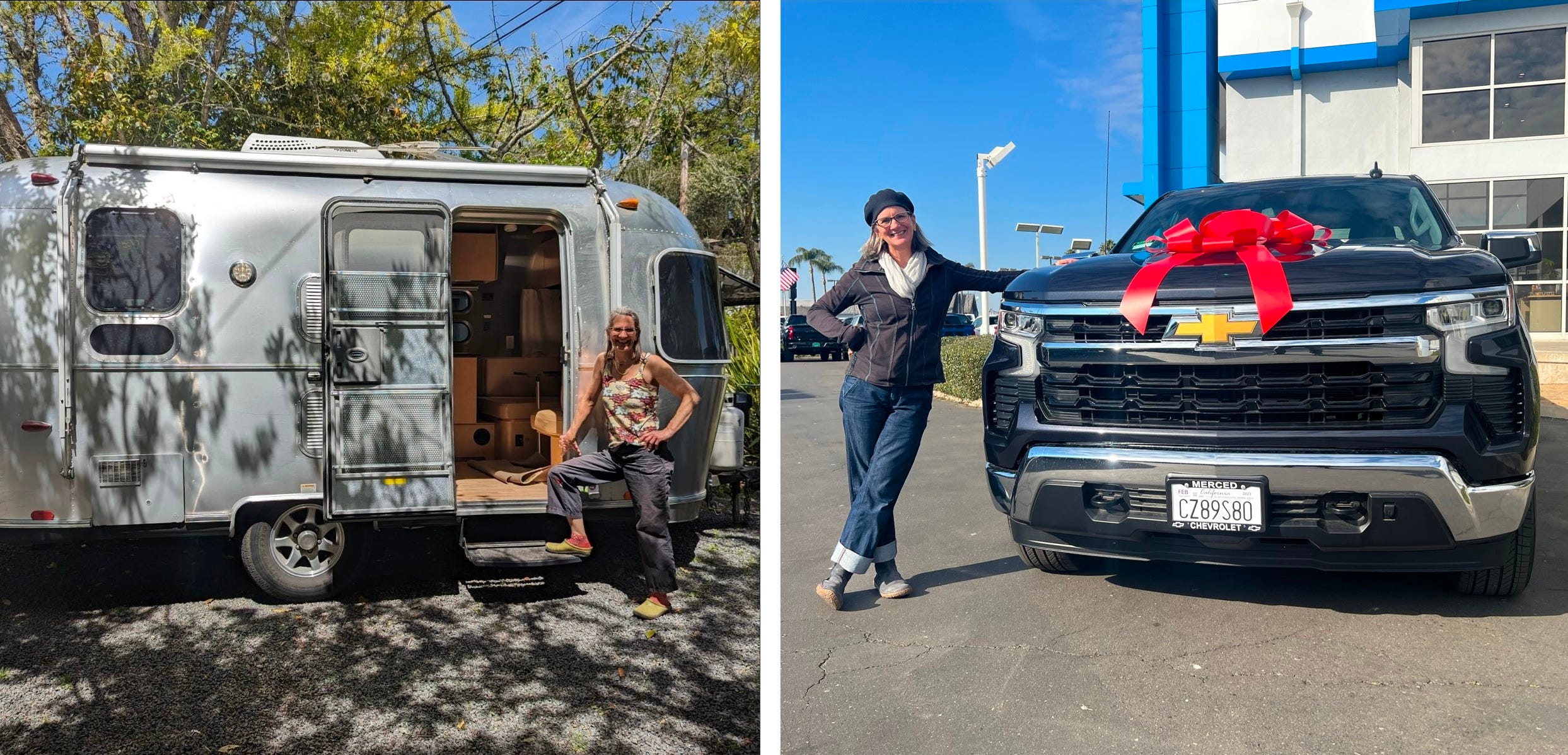
How long have you been planning this new way of life? | The skeleton answer looks something like this: My mother Joanne and I would talk about getting an Airstream since I was in my 20s. (She was never happier than behind the wheel of an automobile, driving the long haul!) In 2018 or so I had a kind of disruption of my head space and a break in my heart that threw me back to my adolescence and had me thinking I might do best in the woods, alone. After Joanne died in 2022 I decided to get an Airstream. So I’ve been thinking about this lifestyle for decades. Planning? That started when Mili got backed into my driveway on 21 April 2023.
What do you do for water? | Mili has a 23-gallon fresh water tank. I also carry a 35-gallon water “bladder.” Between the two I have enough water for my needs for about two weeks at a time. Mili has a water pump that runs on 12-volt electricity (solar → batteries → pump using DC electricity, the only type of electricity a battery provides; a typical residential system is AC, alternating current). When I’m in the “middle of beautiful nowhere” and the fresh water tank runs out, I use a portable water pump to transfer water from the water bladder to Mili via a three-filter system. My drinking water is further filtered via an ultraviolet faucet that now runs on 12-volt as well.
Where does your wastewater go? | The shower and the kitchen and lavatory sinks all drain into a 21-gallon “grey water” holding tank. All toilet waste goes into an 18-gallon “black water” holding tank. (That’s 288 cups. I couldn’t resist doing the math.) I am miserly about my use of toilet paper (but not unhygienically so!) and monitor the tanks daily. By collecting grey water into tubs (one for the kitchen sink, one for the shower) I can use that to dilute the black water waste rather than using the water in the fresh water holding tank. The black tank takes a lot longer to fill, so I do this a lot at the beginning of extended boondocking.
What do you do for electricity? | Speaking of which! This has been such an eye-opener about solar. What magic. I use solar, and once I did some studying and learned how to set the solar controller, what to watch out for in terms of usage (amps per hour), voltage (amount of energy stored in the batteries), and percentages (percent of energy left in the batteries), I discovered that I use very little of the energy available to me. I followed the Shop Guy’s advice and loaded Mili’s roof up with all the panels I could (four panels of 90 watts each). I find it comforting not having to worry about power. I can freely power my laptop as needed, which requires AC. When I need to run AC I turn on Mili’s inverter, which converts the DC energy from the battery into AC power that comes from an outlet similar to a residential outlet but marked “inverter circuit.” I charge my phone and other devices on Mili’s USB ports. At night the lights and igniters run on the stored 12-volt electricity. I typically go to sleep with 90% or more battery percentage. (Fun fact: even though it seems like it’s ok to go down to close to 0%, that’s not how batteries work. Eighty percent is a good cut-off point for Mili’s lithium batteries. And those “12-volt” batteries? When the battery gets down to 12 volts, that’s a problem. The voltage needs to be 13.2 or higher, ideally. Go figure.)
You’ve been in the desert. Does it get cold? Do you have heat? | Yes and yes! Mili has a propane furnace that (mostly*) starts like a charm and cozies the place right up. But when it turns off, it also cools down fairly quickly. So far I’ve only run the heater briefly some mornings.
How do you cook? | I have a three-burner propane stove and an oven, so I cook the normal way. The main difference between how I cook now and how I used to cook is that my menu is simplified and reduced, the burners are much more powerful, and I use a pizza stone in the oven to even the temperature out. I also use much less water for pasta and think ahead about the pans I use so I can minimize clean-up.
How do you store your food? | I was surprised at how much food Kristyn was able to fit into the wee cupboard above the stove and into the propane-fueled refrigerator when she was moving me into Mili. In addition I have a pull-out bin under the bed that has two levels; the top level stores less frequently used items and ingredients like rice, currants, and garbanzo beans. And then, because I do a lot of bulk purchasing (beans, rice, nuts, dried fruits, etc.), I also have a bin in Ashe that I use for backup, bulk, and even less frequently used ingredients like odd flours and spices. The fridge and freezer do a fine job in their wee spaces and nicely hold about two weeks of food and drink that need to be chilled. It’s really quite miraculous how the timing works out. Right now I’m toward the end of a stint and the refrigerator is looking quite bare, but the cilantro is still holding its shape with aplomb and there is one apple and a bit of goat cheese cheddar remaining to serve as lunch for one more hike before I head into town.
What do you do about bathing? | Mili has a fantastic shower. Too bad I can’t just stand under that (expensive, water‑regulating) nozzle and let the day’s dust fall away. Showers eat up the gallons, though, and I’d be left with 0% in no time flat. When I’m boondocking I can wash my hair once a week (which I did at home anyway, so that’s no different) and at that time have a bit of an extended time under the water. I was afraid that I’d no longer be able to get clean every night before bed, but I’ve figured out how to get really clean without a constant stream of water running and while collecting water in the basin in which my feet are placed. Between the basin and the showerhead’s low-flow function and pressure regulator, I use maybe two-thirds of a gallon in a typical wash. Oh, and the water is (mostly*) hot; scalding, actually, which is perfect for mixing with the cool that comes out of the shower head when I first turn it on.
What do you do with your garbage? | Ah, this isn’t the best news for an avid recycler: I have found very little recycling available. As always, I try to minimize packaging, but that’s become a bit more challenging. My sister gifted me an introductory trial of Ridwell, so I’m using those bags for the random plastic packaging. I save up my bottles and aluminum, paper, and hard plastic packaging. While I have found places that take cardboard, bottles, and aluminum, I may be holding on to the paper and hard plastic for some time or just throw up my hands and dump it. I use a small container with a cover for food waste and again am surprised to find that it serves me for a good two weeks. After that I dump it in the RV park along with the very minimal dry garbage that I have composed of small hard plastics and odds and ends.
How long can you park without moving Mili? | About two weeks. And this is perfect because it corresponds to the amount of time permissible on most public lands before needing to relocate. Most BLM and many National Forest lands use a “14 days in a 28‑day period within about a 25‑mile radius” rule, so you do have to move on a regular rhythm. As citizens of the U.S. we are entitled to camp on many BLM or national forest lands and on some wilderness and state lands as well; the rules and regs vary, though, so I’ve been diligent about researching where I’m going. From some BLM lands to others, for instance, you must relocate 25 miles, but if you’re moving from, say, BLM to Kofa Wilderness land, then the distance doesn’t matter (I moved a mile down the road). Staying on land without a campground, which is what we do, is called “dispersed camping.” “Boondocking” or “dry camping” refers to the method: no water hookup, no sewage outlet, no electricity.
How do you figure out where to go next? | So far it’s more art than science and may need to have more science. That said, it’s generally worked out. I use a combination of websites and apps (BLM, The Dyrt, onX, RVLife, dispersedapp), visualizing what I would like and then crossing my fingers I find it. Today I’m going to try a new approach and head out physically to find a location that’s far enough away to be legal, suitable for Mili, and in alignment with what’s going on in my system right now.
How fast can you drive? | I drive at 55 mph to save on diesel fuel and because it also saves on wear and tear. On one of my drives I frequently went up to 65–70 mph, and I noticed when I was settling in that Mili’s guts were much more shaken up than they had been on other trips. It was also a pretty dilapidated highway.
How do you make sure the trailer is level? | Once I’ve got an idea of how I want to position us, I place a level inside Mili from side to side, guesstimate the amount one of the sides needs to be raised, and then place blocks or a wedge in front of or behind the wheel on that side and drive up onto it. This part may take some messing with, but I haven’t found it to be difficult or annoying. Then I place blocks behind the wheels so there can be no forward/backward rolling (one of those absolutely necessary steps) and use the front jack to level fore and aft with the help of the long level (thank you SnL!). Once the leveling is done I use a cordless drill with a special adaptor to lower four “feet” at each corner. These are the stabilizing jacks but aren’t meant to be jacks at all, just to grossly stabilize. Sometimes the jacks are a good foot from the ground, so I use bright orange plastic blocks to make up the difference. These blocks came with Mili, and I was really quite put off by the garish color. Now I see the advantage of the color and in any case am very happy to have them.
Is it hard to hook up Ashe and Mili? | Yes and no. I have found that the weight-lifting aspect of this lifestyle is no joke. I didn’t weigh it, but the hitch and weight-distribution set-up probably weigh around 50 pounds. Once that’s in place there are two solid bars that connect from the hitch back to the A-frame at the front of Mili, behind where the jack and hitch are located. (These provide weight distribution to prevent sway when driving at higher speeds and in wind.) They are heavy and can be difficult to seat when the trailer is uneven, regardless of whether or not I use the (automated) jack. There are other simple, but absolutely necessary steps that I cannot forget for the sake of safety. For everything I have a detailed checklist with specific sequencing for both hooking up and unhitching. I follow it closely. It would be so sad to ruin Mili or Ashe because I just forgot.
How long does it take to pack everything up when you leave somewhere and to unpack things when you arrive? | A surprising amount of time. After a few weeks it seems to take me at least three hours to depart, because it means padding and securing all the soul-filled precious “beings” I carry with me (objets?! How dare I!); putting away all that I’ve put out for visual comfort and pleasure; storing the implements and cookware and books and instruments; rolling up the outdoor rug; folding up the couch and teak table; tucking away the pillows and blanket I use for morning outdoor comfort; and then, of course, the requisite hitch‑up stuff. When I get to an RV park, after leveling and unhitching, the focus is on hooking up: sewer hose from the outlet on Mili to the RV park sewer pipe (the nice ones have a screw‑on system to secure it); surge protector on the RV park 30‑amp outlet to power cord to Mili; water hose to three‑stage filter to city water inlet on Mili. After that? The water pump gets turned off for days and I settle in to a long, hot shower.
How do you get your mail? | I use a service that collects my mail, sifts out the junk mail, and sends it to me upon request. When I’m at RV parks every few weeks I plan ahead and have the mail and any online orders sent to that address.
Do you have wireless or mobile connection? | Yes, thankfully. After extensive research and looking far and wide for anything but, I succumbed to Mr. Musk’s offering as the best fit. “Nole” is the mini satellite dish I use. They (gender neutral for sure) run on either AC or DC power and have performed fabulously when there is open sky, so the desert is perfect. I plug in, point them to the north-ish, and wait a beat or two before—voilà—Internet. In the trees? Not so much; not at all, really. If I’m in the trees, then, I need to have a mobile connection. I spent a few days down a narrow road heading up a mountain, at 5,600’ with spotty internet and no mobile connection, and I did not like it. I became anxious and unsettled. That surprised me. But I guess at this point I’m just not ready for that. My people are a lifeline and, as they’ve proven to be throughout my life, supportive and good for a reality check. I’m also doing a year-long online course. I have to do my taxes, finish a trauma certificate course, fulfill some requirements for my national occupational therapy certifications, do my finances, write these posts, keep in touch with business prospects . . . You get the idea. I have (and will) go “dark” for days at a time, but the connection is there if I need it. My future may hold true disconnect. In fact I expect that. Just not yet.
How do you stay safe when you’re hiking alone? | I roped three of my peeps into a message and satellite communication system. Before I go out I let them know where I’m headed and how long I think it will take / when I expect to be back in communication or at Mili. When at least one of them gives me a thumbs up I know they know and will monitor my Google Map dot, which works on satellite. If they notice that the dot is static for a length of time, like an hour, then probably something is awry. Not sure what the next step would be, but I don’t plan on testing it out. I am pretty safe with a smattering of on-the-edge scrambling and curiosity-seeking. I check in with and trust my gut, Dan, which plays the major role, while Elizabeth, my brain, holds Dan’s back. The more I rely on Dan the greater his skill becomes. I’ve been by his side as he hones his muscles, sheds his dormant fat, and grows into his place in the world. When I’m back home I let the team know and send them some (hopefully nice) photos and the loop is closed.
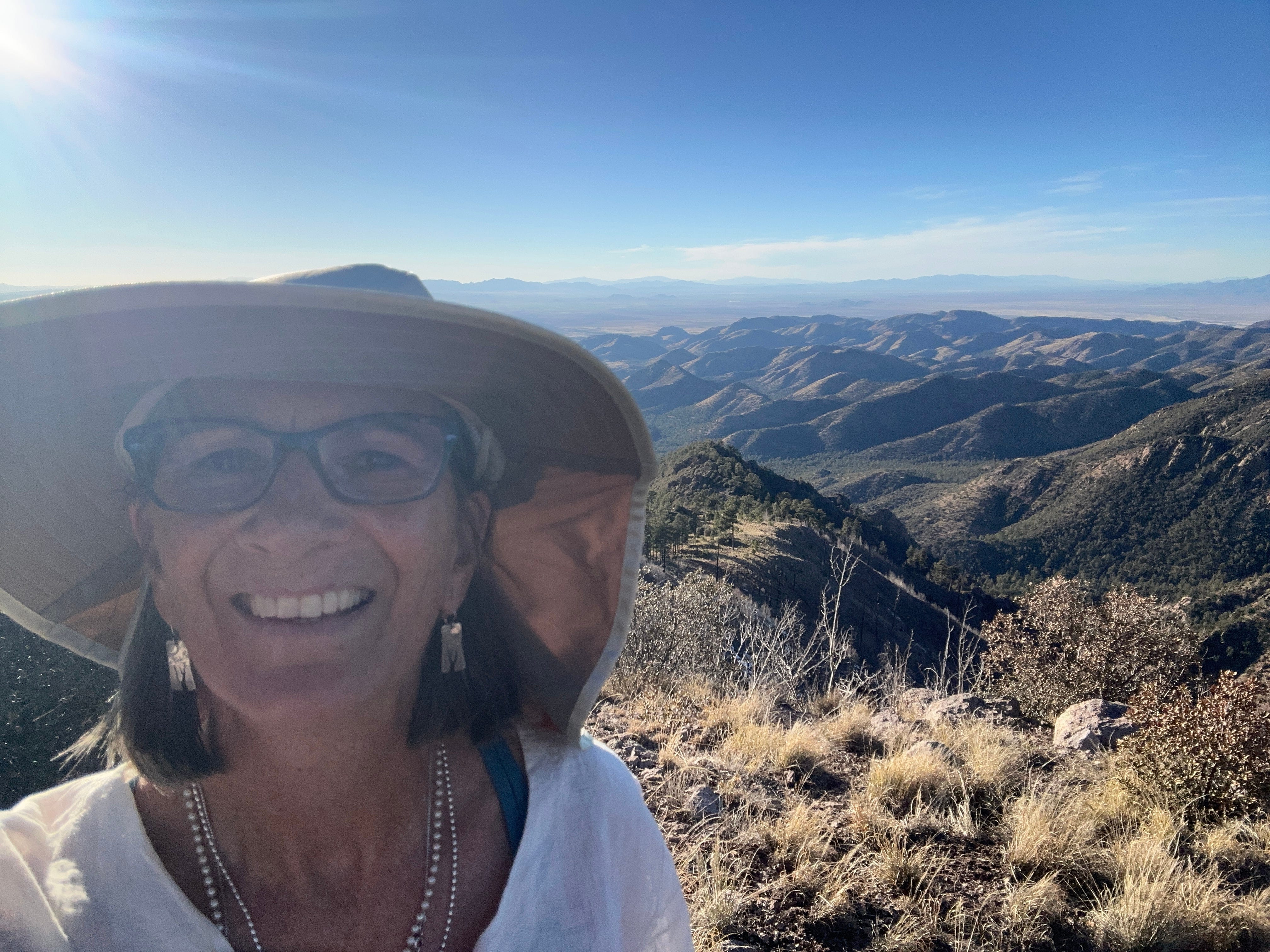
Are there any scary animals out there? | Not so far.
What do you do if you get sick? | Probably mostly wait it out. But I don’t know yet. I’ve only been dealing with the same health situation that’s been with me for well over a year. That experience has given me the opposite of a knee‑jerk reaction when I feel something’s not right. So far I’ve had some new unexplained health issues come and go. If something new in fact persists I’ll call the telehealth line that is part of the non‑conventional health care I pay for each month. It’s a co‑op system whereby each individual pays in and then, if you need coverage, you pay out of pocket according to the provider, but the co‑op pays you back after a certain “deductible” (it isn’t called that because it’s not traditional insurance, but it’s essentially a deductible).
Are you scared? | No. At least not 95% of the time. And typically not of humans or wildlife. Though I can get myself worked up when I’m tired and in pain. Then I might concoct unlikely scenarios involving foes. Most humans, though, are friends. It’s just that the media and current culture paint broad sweeping “foe” displays. What scares me most is when something goes “wrong.” My heart jumps up to a driving beat, my system fills with a fiery blaze, and my brain fizzles and sparks. You can see that this isn’t the best scenario for clear thinking when it’s needed most. So I do the thing with the stuff: expand my breath behind, feel the porosity of my skin and the space within, think of something that makes me smile . . .
Are you all alone? | Are you all alone? | Without other humans, yes; about 98% of the time when I’m boondocking. At the spot where I’m located now I’ve had a couple of visitors come up my “driveway,” and we’ve engaged in pleasant, informative exchanges; informative for me, anyway. In other places I could see lights and smell camp fire smoke. In some, not one light in the distance, even. It’s quite exquisite.
Are you lonely? | No. I don’t think loneliness is in my DNA. My sister and I were discussing this and she has also rarely experienced loneliness. My siblings were all older than me so I spent a good deal of time alone growing up. I entertained myself without much thought to it. I look out now at the rolling fields of creosote, sage and pinyon in the distance; a carpet of desert poppies and locoweed surrounding me; the black-throated sparrow and horned lark engaged in their evening conversations . . . No, I’m not lonely.
Who do you talk to during the day? | Connection. When I’m not going dark I probably talk to another human live at least once a day. When I’m doing a lot of business work it can be multiple humans each day. And when I’m dark or alone, I talk to the beings on my altar; the stones outside; the bunnies on my bed that keep me comfy; Mili n’Ashe; the stars, the moon, the sun as it rises and sets; the decaying cholla; the scampering prairie dog; the mind‑bogglingly strong ants; the black‑throated sparrow and the coyotes; the bell on my door . . . So many friends.
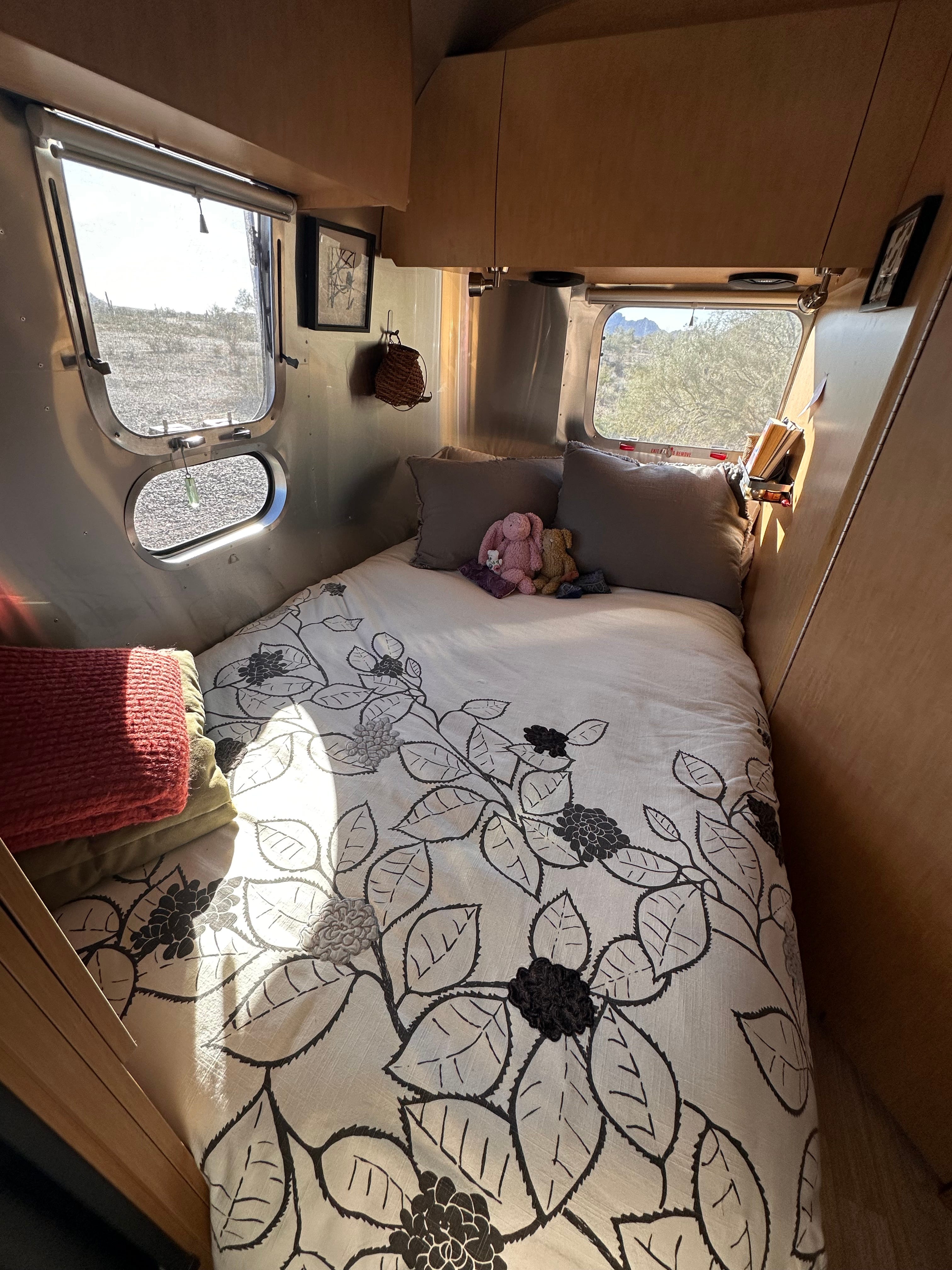
How do you start your day? | I’ve no alarm set. Other than that my day begins the way it has for quite some time, with a song and a smile and practice. My practice has deepened here and so there are days when it may be hours before I shift from practice to breakfast, having laid the morning table with ritual and movement to connect, acknowledge, and honor. Then I get to my favorite meal of the day, typically outside with the sun, friendly flies, and a couple of good books as companions.
What are your routines throughout the day? | My days are marked by morning practice, meals, and often before bed a ritual practice. In between ranges from taxes to courses (OT work, embodiment and trauma training, the year‑long “Mythic Body” course I’m doing); talking to sitting; hiking to watching a TV show.
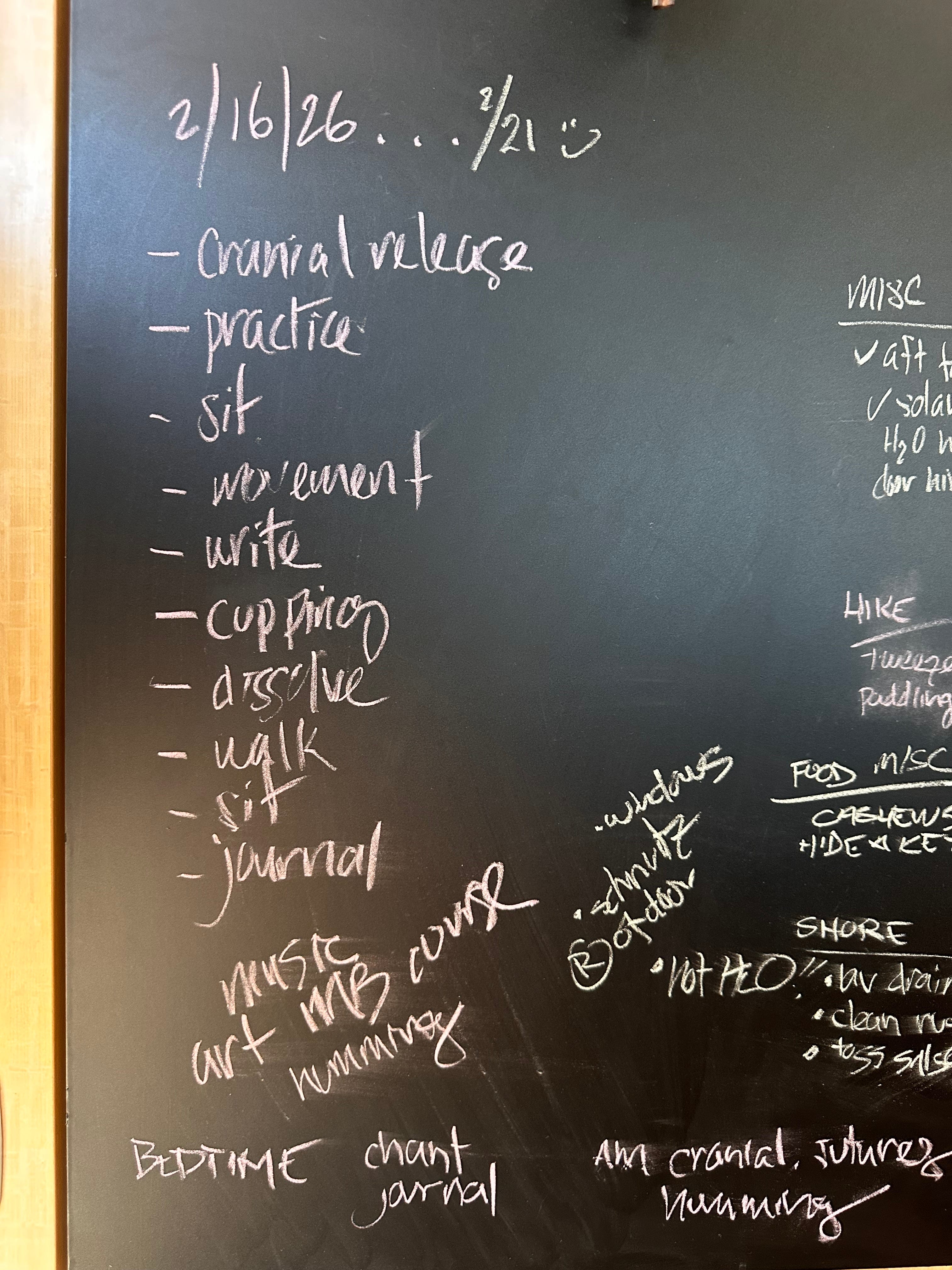
Since Mili is all metal, does it get hot there in the desert? | Yes, Mili is aluminum metal (the most abundant metal in the Earth’s crust, it turns out). But the reflective capacity of aluminum, the insulation, the window tinting, and the effective ceiling fans all make for a pleasant interior. So, not too hot yet, and also the temperature has been at most 84°F / 29°C up to now. If it does get too hot for my comfort, Mili has air conditioning. I’ve not been a huge fan of air conditioning in my life so far. We’ll see.
How much does it cost? | I’ll get back to you on this, but it’s not as inexpensive as I might have thought at the outset. Some research before I took off eased me into the reality. My rent is pretty low, of course, but my fuel and internet and mobile costs are much higher; I pay each time I get mail sent to me; propane isn’t cheap; and sometimes I have to pay for water. So there are thises and thats that add up. My grocery expense seems higher than it was when I was stationary, which doesn’t make much sense to me. I think it’ll take a good year to get a solid idea of costs.
How do you fix things? | Per below: slowly and with center and a lot of research and the assistance of friends. Also, I carry a wide assortment of tools and that makes things easier.
How do you make sure you don’t screw anything up? | I really don’t know if I’ll screw something up, but I generally go slow and do a lot of centering and researching before starting a project that has the potential of going awry. I have found Perplexity to be a patient and detailed teacher and generally try not to freak out. There have been quite a few times, however, when I’ve found myself at a complete loss. That loss has not been threatening to health or safety, just super annoying; with patience and space it eventually gets resolved. And when I’m preparing to depart and arriving somewhere I use extensive, sequenced lists to be sure I haven’t forgotten anything. (Which reminds me: I need to add “secure jack cover” to that departure list; a replacement’s on the way.)
How is it changing you to not interact physically with people for extended periods of time, to be surrounded by and interacting with nature more? | This is not a short answer and may do best in a post of its own. Briefly, I feel like I am shedding attitudes and concepts that were not mine to begin with, and what’s left over is more of a vessel. It’s as though I’m emptying, removing the worn guitar strings and finding out where to source new ones, how to put them on so that I can tune this instrument according to my surroundings, to what’s needed at the time.
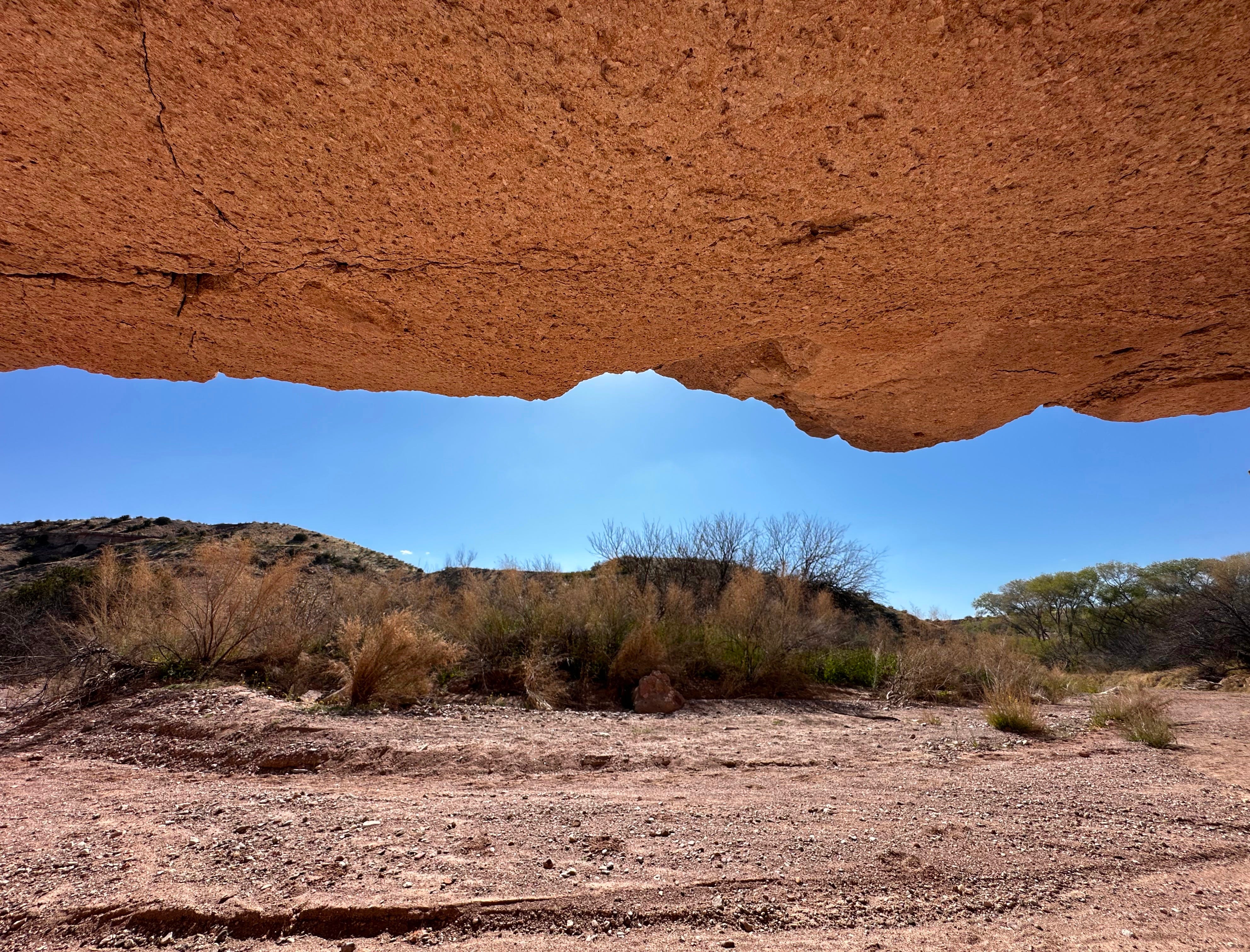
How long do you plan to follow this way of life? | Unknown.
If you’re curious about anything I didn’t cover here, feel free to ask in the comments—I’d love to provide a response if I can.
*I had to fix both the water heater and the furnace on separate occasions. The water heater repair was extensive and required the help of a generous RV park neighbor. The furnace was a fairly easy fix once I knew what to do. I was boondocking at the time and grateful for Airstream’s customer support on the end of my mobile connection
It is so like you, to be so patient and thoughtful in taking the time to answer so many curiosities and wonders, I for one, have had as we “peek” behind the curtain of Kimberlys’ new life and adventures!! I miss you but am happy you are happy and fulfilling your hearts desires. Jase xx❤️
> < hee heeeee! I'll put it after numerous returns at the bottom of this comment so you can read per your desire . . . I do think of all the lands I've been on as having a forgotten history and in that way, similar to Black Lives Matter.
Yes. and No. re: Aikido. I miss the community. I miss stepping on the mat and into an effortless transfer of something greater than myself out into the physical world. I haven't practiced that as much separate from Aikido and so I think it will take repeated engagement to step into that sense out here. I use daily ritual, qi gong, somatic practices and this substack endeavor as vehicles.
Bureau of Land Management :)